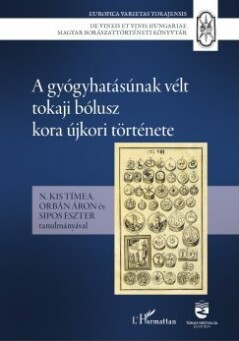
- Titel
- A gyógyhatásúnak vélt tokaji bólusz kora újkori története
- Title (EN)
- The Early Modern History of the Tokaj Bolus as a Putative Medicinal Remedy
- Autor
- N. Kis Tímea | Orbán Áron | Sipos Eszter
- Editor
- N. Kis Tímea
- Peer review
- Molnár Dávid
- Date
- 2025
- Place
- Budapest | Sárospatak
- Zusammenfassung
- Számos hazai és külföldi orvosdoktori értekezés tárgyalta a kiváló tokaji borok emberi szervezetre gyakorolt jótékony hatásait a kora újkorban. Azt már kevesebben tudják, hogy nem a bor, hanem a bólusz volt az első tokaji termék, melyet medicinaként fogyasztottak Európa-szerte. Kiválóságát a korabeli természettudományi ismeretek alapján igazolt elméleti érvek és a gyakorlat is bizonyította: 1553-ban a bécsi, 1681-ben pedig a hallei pestist gyógyították az alkalmazásával – a korabeli források szerint kiemelkedő sikerrel. E kötet szerzői a tokaji bólusz kora újkori történetéről: felfedezésének körülményeiről, gyűjtéséről, vizsgálatairól, valamint kialakulásának, használatának és terminológiájának változásairól, továbbá európai elterjedéséről adnak számot a korabeli tudományos diskurzusban. E gyógyföldet – a szintén tokaj-hegyaljai jelenségnek vélt növényi arannyal együtt – számos hazai és külföldi naturalia-gyűjteményben elhelyezték; birtoklásuk kifejezett igénye már a XVI. század második felétől megfigyelhető. A tokaji bólusz, bor, illetve arany a gyógyhatásuk tekintetében rokon fogalmak voltak, melyek mindegyike hozzájárult e borvidék kiválóságának köztudatba kerüléséhez.
- Summary (EN)
- In the early modern period numerous domestic and foreign medical doctoral theses discussed the beneficial effects of the excellent Tokaj wines on the human body. A lesser-known fact, however, is that it was not the wine but the bolus that became the first Tokaj product to be consumed as a medicine throughout Europe. Its excellence was confirmed both by theoretical arguments based on contemporary knowledge of natural science and by practice: in 1553 the plague in Vienna, and in 1681 the plague in Halle were treated with its application – and contemporary sources report outstanding success. The authors of this volume present the early modern history of Tokaj bolus: the circumstances of its discovery, its collection and examination, the changes in its formation, use and terminology, as well as its spread across Europe within contemporary scientific discourse. This medicinal earth – together with “vegetable gold”, likewise regarded as a Tokaj-Hegyalja phenomenon – was placed in numerous Hungarian and foreign collections of naturalia; a marked desire to possess them can already be observed from the second half of the sixteenth century. In terms of their therapeutic effects, Tokaj bolus, wine and gold were closely related notions, each contributing to the establishment of the outstanding reputation of this wine region in the European consciousness.
- Herausgeber
- L'Harmattan
- Co-publisher
- Tokaj-Hegyalja Egyetem
- Type of publication
- tanulmánykötet
- Field of science
- Irodalomtörténet / History of literature (13020) | Eszmetörténet, szellemtörténet, tudomány- és technikatörténet / History of ideas, intellectual history, history of science and techniques (12981) | Kora újkori történelem / Early modern history (12976)
- Stichwort
- bolus | terra medicinalis | terra sigillata | gyógyföld | bolus | terra medicinalis | terra sigillata | medicinal earth
- Format
- Text
- ISBN
- 978-963-646-479-0|978-963-646-440-0
- Series
- Europica varietas Tokajensis. De vineis et vinis Hungariae – Magyar borászattörténeti könyvtár
- Sprache
- magyar | angol
- Edition
- Első kiadás
- Rechte
- CC BY-NC-SA 4.0